Feedlot Finance: Working Capital vs Infrastructure
You spot a pen-filling opportunity at Thursday's saleyard. Feeder steer prices are down, demand for finished beef is firm, and the numbers stack up. But your finance is tied up in a rigid term loan and your bank wants three weeks to approve additional drawdown. By Friday, the cattle are gone.
This is the defining problem with traditional agribusiness loans Australia-wide. They were not designed for the speed, flexibility, or independence that modern cattle operations need.
There are two distinct types of livestock finance, and mixing them up costs producers real money. Working capital finance keeps your operation running day to day. Infrastructure finance builds your operation for the long term. Getting the structure right means better cash flow, more trading freedom, and faster access to opportunities when they appear.
This article explains both types, when to use each, and what goes wrong when producers end up with the wrong structure.
Why Traditional Livestock Finance Holds Producers Back
Most livestock finance in Australia is dominated by major banks and stock and station agents. Both come with significant limitations.
Banks move slowly. Their credit processes are built for residential borrowers, not high-turnover cattle businesses where a three-week approval timeline can mean a missed season.
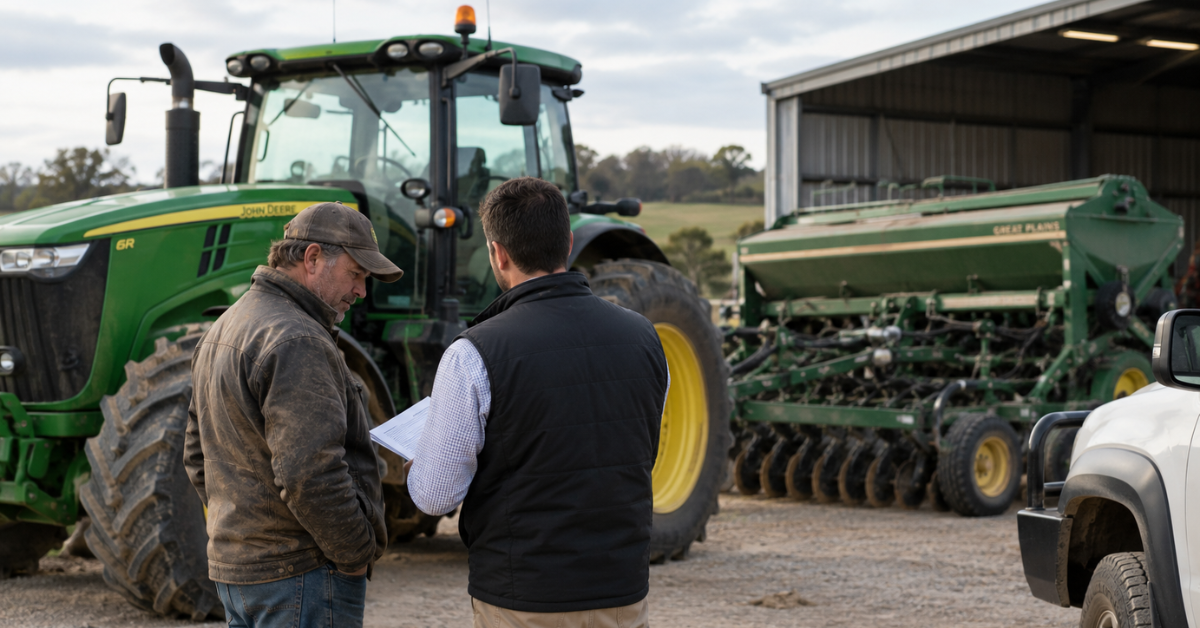
Agent-linked finance creates a different problem. Many providers connected to stock and station agents require you to trade through their network as a condition of your facility. That means you cannot always buy from the yards offering the best price, negotiate private treaty deals, or choose your own processors and transport. Your trading freedom is part of the cost of the loan, whether that is disclosed or not.
On top of this, traditional agribusiness loans often carry per-head tracking requirements, frequent site visits, and detailed reporting obligations that drain time from farm operations.
According to the Department of Agriculture, Fisheries and Forestry, aggregate lending to the Australian farm sector grew 5% in real terms in 2024-25, with beef grazing and feedlot businesses carrying around $35 billion in farm loans. That is a lot of capital, and the structure of it matters enormously to farm profitability.
Working Capital Finance: How It Works and When to Use It
Working capital finance is a revolving facility. You draw funds when you need them, repay as cattle are sold, and access the facility again for the next opportunity. Interest is charged only on what you have drawn, which makes it cost-efficient for operations with variable cash flow timing.
It is designed for short-term, high-turnover needs: feeder cattle purchases, feed costs, wages, transport, and any expense tied to the normal production cycle. The repayment term aligns with the trading cycle, not a fixed bank schedule.
When Working Capital Makes Sense
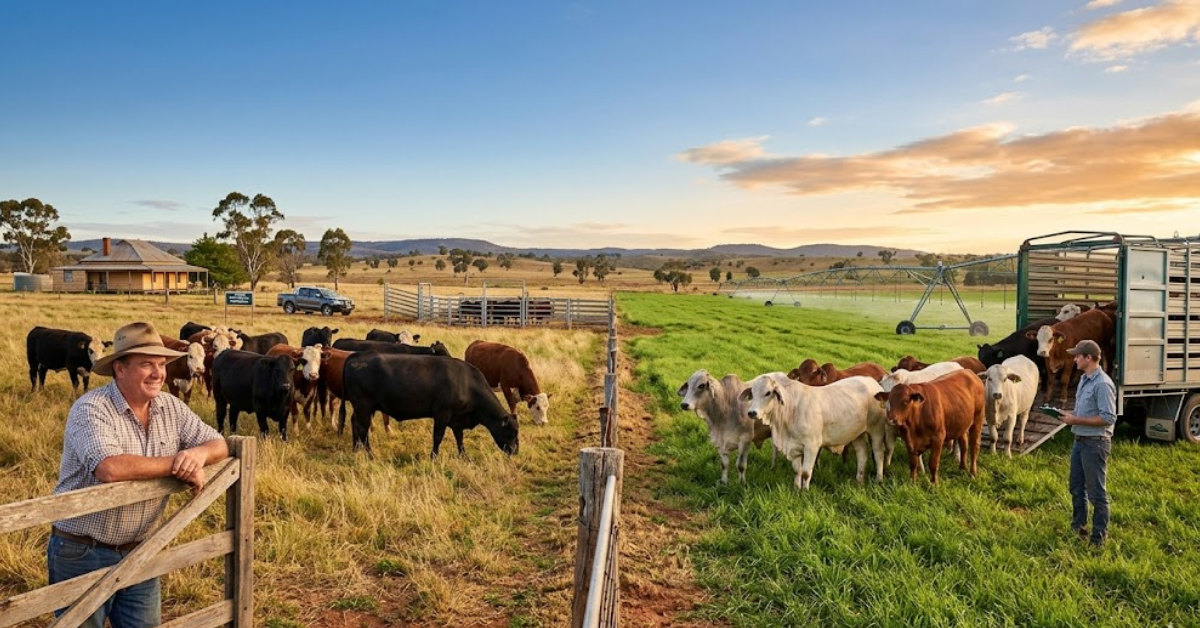
A Queensland feedlot operator running 2,000 head sees feeder steer prices ease 5% in the September quarter. A working capital facility lets them bring on an additional 400 head within days, fill the pens while the margin is there, and repay when cattle are turned off 90 days later. A traditional term loan application would still be under review.
For beef producers running trading operations, working capital support is particularly valuable. You respond to market signals without liquidating other assets or locking up capital in long-term repayment structures that do not match how cash flows through the business.
The Risk of Using the Wrong Finance Here
Using a long-term loan to fund working capital needs means paying interest on a fixed balance for years after the need has passed. Repayments are fixed regardless of whether cattle have been sold. And if you hit a lean period, that fixed obligation adds pressure exactly when you do not need it.
Equally, relying on supplier credit or overdrafts as a working capital substitute costs more and does not scale with your operation.
Infrastructure Finance: Building for Long-Term Growth
Infrastructure finance is for the physical assets of your farm that generate value over many years: feedlot yards, water and effluent systems, sheds, grain handling equipment, and land improvements. A term loan or lease paid down over 5 to 15 years is the right match for investment that takes years to pay off.
The Australian feedlot sector's expansion demonstrates this clearly. Meat & Livestock Australia reports that national feedlot capacity reached a record 1.7 million head in 2025, supported by five consecutive quarters of investment in yards, feed systems, and accreditation infrastructure.
Matching Finance to the Asset
A $400,000 yard upgrade that will generate returns over the next 10 years belongs in a 10-year term facility, not a working capital line. Funding it through a working capital facility creates short-term repayment pressure that the asset cannot service at that pace.
Farm land finance and equipment finance operate on the same principle: match the repayment term to how long the asset generates returns. This protects your day-to-day liquidity while still building the physical base of your operation.
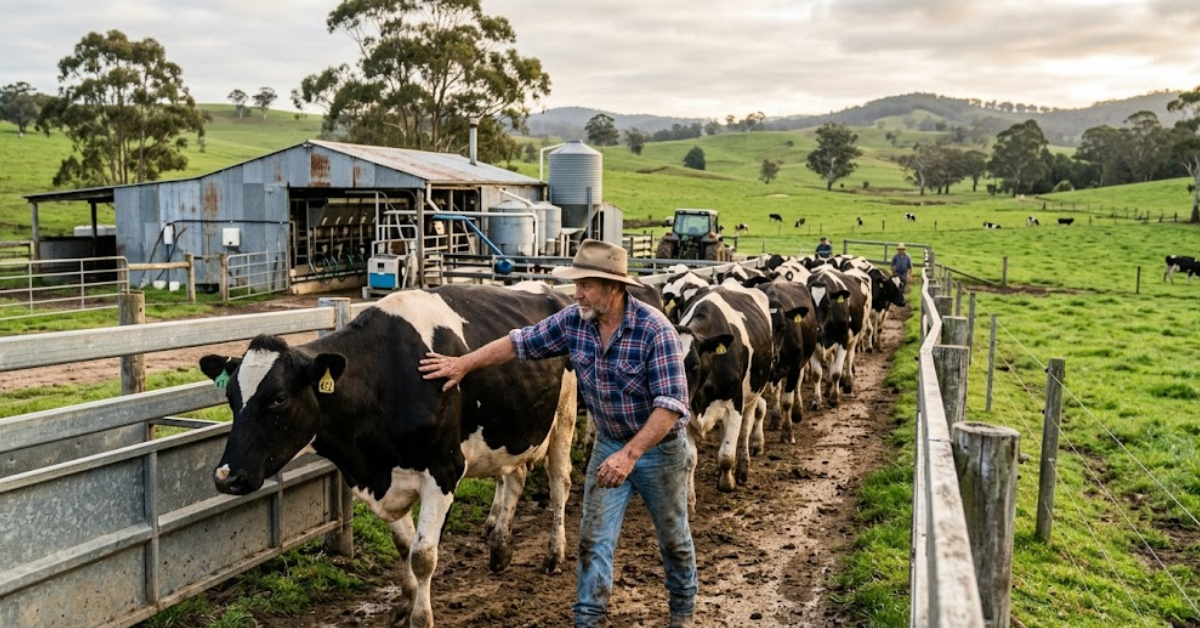
Dairy producers expanding milking capacity or improving herd housing can apply the same logic. Long-term infrastructure funding through a properly structured facility means the expansion pays for itself over time without straining operating cash flow.
Working Capital vs Infrastructure Finance: At a Glance
Use this table when evaluating what type of livestock finance is right for a specific need.
| Feature | Working Capital Finance | Infrastructure Finance |
|---|---|---|
| Purpose | Stock purchases, feed, wages, day-to-day costs | Yards, sheds, water systems, equipment, land |
| Finance type | Revolving line of credit or short-term loan | Term loan or lease arrangement |
| Repayment | Aligned with livestock trading cycles | Fixed schedule over 5–15 years |
| Best for | Feedlot operators, beef trading, seasonal gaps | Capacity expansion, infrastructure upgrades |
| Drawdown | Flexible – draw and repay as needed | Single drawdown at project start |
| Key risk if misused | Paying long-term interest on short-term stock needs | Working capital drained by infrastructure cost |
Livestock Capital provides facilities from $100,000 to $6 million structured as loans or leases. Both working capital and infrastructure needs can be addressed through a single independent provider, simplifying your overall finance structure.
What Happens When Producers Use the Wrong Finance Structure
Mismatched finance is one of the most common and avoidable problems in cattle operations. It shows up in three ways:
- Missed buying opportunities: Fixed loan structures or agent-linked facilities with restricted access cannot respond quickly to market moves. One missed pen-filling window in a tight margin environment is a direct hit to the quarter.
- Cash flow strain: Funding long-lived infrastructure through a working capital line, or carrying a term loan for stock that was sold months ago, creates interest expense that has no productive purpose.
- Lost trading freedom: Agent-linked finance ties your purchasing decisions to a specific trading channel. For high-volume feedlot operators where buying at the right price is the primary driver of pen margin, that restriction has real dollar value.
The MLA State of the Industry Report 2025 confirms the sector generated $77.1 billion in turnover in 2023-24. Producers operating in a market of that scale need finance that works as hard as they do, not structures that limit how and when they can trade.
A review of your current finance structure is worth doing if you have passed on cattle opportunities due to approval delays, spent significant time on lender-required reporting, or found your trading options restricted by your finance provider. More on identifying warning signs is covered in our modern farm management guide.
How Livestock Capital Works: Independent Agribusiness Loans for Australian Producers
Livestock Capital is an independent, family-owned non-bank lender. That independence is not a marketing point. It is structural. There is no connected stock and station agency, no requirement to trade through specific channels, and no commercial interest in where you buy or sell your cattle.
Assessment is based on your operation as a whole: your farming history, production performance, and business fundamentals. There is no per-head tracking requirement, no individual animal monitoring, and no excessive paperwork. The process is designed to support fast decisions for time-sensitive livestock purchasing.
What Livestock Capital Offers
- Beef cattle finance: Working capital and trading facilities for beef producers and feedlot operators.
- Farm land finance: Long-term funding for land acquisition and capital investment.
- Equipment finance: Lease and loan structures for feedlot equipment and farm machinery.
- Dairy cattle finance: Flexible facilities for herd purchase and dairy infrastructure.
Facilities range from $100,000 to $6 million with competitive, risk-adjusted pricing. For a breakdown of how this compares to lease arrangements for dairy producers specifically, see this guide on buy vs lease planning.
Frequently Asked Questions
What is the difference between working capital finance and a term loan?
Working capital finance is a revolving facility you draw and repay in line with your livestock trading cycle. A term loan is a fixed drawdown repaid over a set period, suited to infrastructure or land investment. The key difference is purpose and repayment structure. Using a term loan for working capital needs, or vice versa, creates unnecessary cost or cash flow pressure.
Do I have to trade through specific agents or saleyards?
Not with Livestock Capital. As an independent provider, there are no trading restrictions attached to your facility. You buy from and sell to whoever offers the best deal for your operation, whether at a regional saleyard, through a private treaty, or directly with a processor. That freedom is part of what independent livestock finance delivers.
How quickly can I access funds when a buying opportunity arises?
Livestock Capital's assessment process is designed for speed. The focus is on your overall operation rather than lengthy documentation requirements. Exact timelines depend on application complexity, but the approach is built to support time-sensitive purchasing decisions rather than slow down your response to the market.
What reporting is required once a facility is established?
There is no per-head tracking requirement or individual animal monitoring. Livestock Capital assesses your operation as a whole and keeps ongoing reporting obligations to a minimum. This reduces the administrative burden significantly compared to traditional agricultural lenders who require detailed movement registers and frequent site visits.
Can I use one provider for both working capital and infrastructure finance?
Yes. Having both facilities with a single provider simplifies your finance management, ensures consistent assessment of your operation, and gives you one relationship to manage. Livestock Capital can structure a working capital facility for day-to-day operations alongside a longer-term arrangement for infrastructure or equipment investment.
What facility sizes are available?
Livestock Capital provides funding from $100,000 to $6 million, subject to approval, structured as loans or lease arrangements. Pricing is competitive and risk-adjusted to your specific operation. Finance solutions are available for beef, dairy, and sheep farming enterprises across Australia.
Grow Your Operation with the Right Agribusiness Loans Australia-Wide
Working capital finance and infrastructure funding are different tools for different jobs. Using the right one for each purpose protects your cash flow, keeps your trading options open, and ensures repayments align with how the investment actually generates returns.
Mixing them up, or accepting an agent-linked facility that restricts where you trade, adds cost and constraint that holds back farm growth. The structure of your finance matters as much as the rate.
Livestock Capital provides independent, practical agribusiness loans for Australian beef producers, feedlot operators, and dairy farmers. No per-head tracking, no trading restrictions, no excessive paperwork.
Call
1300 980 548 or visit livestockcapital.com.au/beef-finance to discuss a facility structured around your operation.