Livestock Finance Australia: Cattle Loans vs Leasing
Growing a cattle operation takes more than good stock sense and reliable rain. It takes capital. And for most Australian producers, the biggest barrier to herd expansion is not a lack of opportunity. It is getting the right livestock finance in place at the right time.
Traditional agricultural lenders have long made this harder than it needs to be. Slow approvals, mountains of paperwork, per-head tracking requirements, and rigid loan structures all drain time and limit flexibility. For producers watching the market move, that kind of delay can mean missed opportunities worth tens of thousands of dollars.
This guide breaks down how livestock finance Australia works in practice. You will learn the difference between cattle loans and leasing, which structures suit which operations, and how to choose a finance model that supports your farm's growth rather than holding it back.
Why Traditional Livestock Finance Holds Farms Back
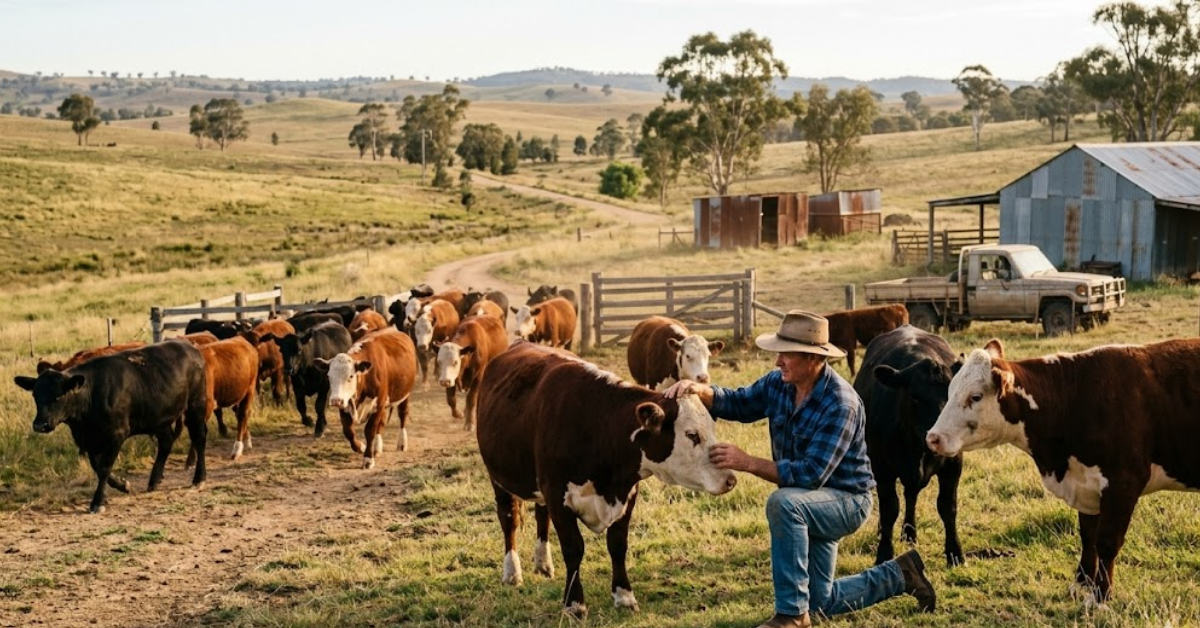
If you have ever applied for cattle finance through a major bank or traditional agricultural lender, the process probably felt more like an audit than a partnership. Detailed business plans, years of financial records, individual animal tracking, and ongoing reporting obligations are standard requirements.
For a producer trying to act on a good buying opportunity at the saleyards, these requirements create real friction. By the time approval comes through, the cattle have already been sold to someone else.
The Hidden Costs of Rigid Finance
The obvious cost of traditional finance for livestock is the interest rate. But the hidden costs are often more damaging to a farm's bottom line.
- Administrative time spent on per-head tracking, ear tag reports, and compliance paperwork
- Missed buying windows when favourable prices appear at short notice
- Restricted cash flow caused by rigid repayment schedules that do not align with seasonal income
- Delayed expansion because every new purchase requires a fresh approval cycle
According to the Australian Bureau of Agricultural and Resource Economics and Sciences (ABARES), livestock and livestock products are forecast to reach a record value of $40 billion in 2025-26. That level of market activity means producers need finance that can keep pace with the speed at which cattle change hands.
What Modern Cattle Operations Actually Need
Australian cattle producers are not looking for complex finance products. They need working capital that is accessible when opportunities arise, approval processes that reflect how farms actually operate, and ongoing flexibility without ongoing bureaucracy.
In short, they need finance that stays out of the way and lets them focus on the paddock, not the paperwork.
How Cattle Loans Work in Livestock Finance Australia
A cattle loan, sometimes called a livestock loan, is a straightforward borrowing arrangement. A lender provides a sum of money for the purpose of purchasing livestock, and the borrower repays that amount plus interest over an agreed term.
Fixed Term Loans
Fixed term loans provide a set amount of capital upfront with scheduled repayments over a defined period. This structure works well when you know exactly how many head you want to buy and when. The interest rate and repayment schedule are typically locked in from the start, which gives certainty around monthly or quarterly costs.
For beef producers purchasing a known number of breeders or backgrounders, a fixed term loan can be a clean and predictable option.
Revolving Livestock Lines of Credit
A revolving line of credit works differently. Once approved for a set limit, you can draw down funds as needed for eligible cattle purchases and then repay as stock is sold. This means the facility stays open and can be used repeatedly without reapplying each time.
For producers who buy and sell throughout the year, a revolving facility aligns much better with how the business actually runs. You are not locked into a single purchase event. You have ongoing access to capital as the market shifts.
When a Cattle Loan Makes Sense
- You are making a one-off or infrequent large purchase, such as a foundation breeding herd
- You prefer the certainty of fixed repayments and a defined loan term
- Your operation does not involve regular cattle trading throughout the year
How Cattle Leasing Works
Cattle leasing is a less common but increasingly popular option in livestock finance. Rather than borrowing money to buy cattle outright, a leasing arrangement allows you to access livestock without the full upfront cost of ownership.
Under a typical cattle lease, the finance provider retains ownership of the stock while you manage them on your property. You make regular lease payments and benefit from the productive output of the animals, whether that is calves, weight gain, or milk.
Key Benefits of Leasing
- Preserves working capital for other farm expenses such as feed, fencing, and wages
- Reduces the upfront financial commitment of herd expansion
- May offer tax advantages depending on your business structure (speak with your accountant)
- Gives access to productive stock without tying up borrowing capacity for land or equipment
When Leasing Makes Sense
Leasing tends to suit producers who are building scale quickly and want to increase herd numbers without exhausting their cash reserves. It is also worth considering for younger or newer farmers who may not yet have the equity base that traditional lenders require for a large livestock loan.
Dairy operations, in particular, can benefit from leasing arrangements. Accessing a productive milking herd through a lease allows you to generate income from day one while spreading costs over time. Livestock Capital offers cow finance options that are designed around this kind of operational need.
Choosing Between Loans and Leasing for Your Livestock Finance
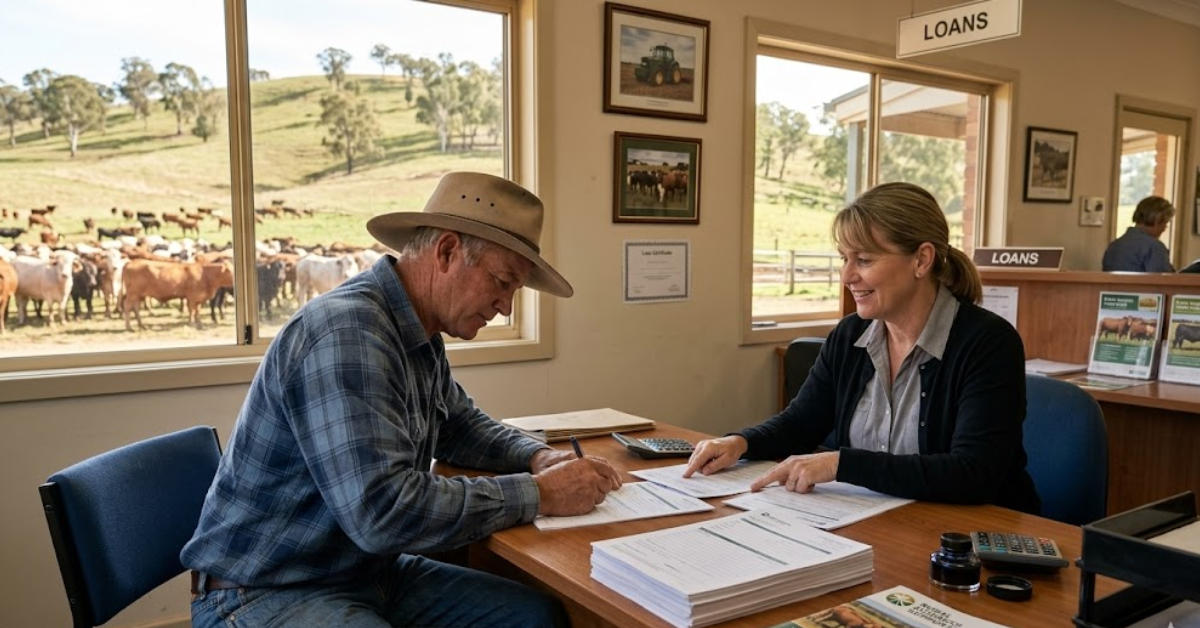
There is no single best approach to cattle finance. The right structure depends on your operation type, cash flow cycle, growth plans, and appetite for financial commitment.
Beef Producers and Backgrounders
If you are running a breeding or backgrounding operation, a revolving line of credit often provides the best balance of flexibility and cost efficiency. You can buy when prices are right, sell when cattle hit target weights, and cycle your facility accordingly.
A fixed loan may be more appropriate for a specific herd expansion, for example purchasing 200 breeders to establish a new property.
Feedlot Operators
Feedlots operate on fast turnover and tight margins. A revolving facility or feedlot finance arrangement is almost always a better fit than a fixed term loan. The ability to draw down and repay as cattle move through the lot keeps cash flow aligned with the production cycle.
Dairy Farmers
Dairy operations have unique capital requirements. Productive cows represent both an asset and a daily income stream. Leasing can be an effective way to scale a milking herd without a large lump sum payment, while loans suit producers looking to own herd genetics outright.
Cost Considerations Across Both Options
With a loan, the total cost of ownership is typically the purchase price plus interest. With a lease, you are paying for use rather than ownership, which often means lower periodic payments but no equity in the livestock at the end of the term.
The critical question is not which option is cheapest on paper. It is which option supports the strongest cash flow position while still enabling growth.
The Real Cost of the Wrong Finance Structure
Choosing the wrong finance model is not just inconvenient. It can actively hold your farm back.
Missed Market Opportunities
The cattle market moves quickly. According to Meat & Livestock Australia (MLA), nearly 80% of Australian beef producers reported a positive outlook heading into 2026, with restocker demand strengthening across Queensland and New South Wales. When confidence is high and competition for young cattle intensifies, being stuck in a slow approval process means losing out on quality stock at the right price.
Administrative Drain on Farm Operations
Every hour spent filling in compliance forms, tracking individual ear tags, or preparing reports for your lender is an hour not spent on the farm. For owner-operators managing stock, fencing, water, and seasonal planning, that time is extremely valuable.
The administrative burden of traditional livestock finance is often underestimated until you are deep into it.
Cash Flow Pressure From Rigid Repayments
A repayment schedule that does not account for seasonal income variation can put unnecessary pressure on cash flow during quieter months. If your finance is structured around fixed monthly repayments but your income comes in waves after weaning or at the end of a backgrounding cycle, you are constantly managing a mismatch.
Flexible finance structures solve this by aligning drawdowns and repayments with the natural rhythm of your operation.
Best Practices for Livestock Finance in Australia
A few practical checks can make livestock finance easier to manage and more effective for long-term growth.
Assess Your Working Capital Position First
Before approaching any finance provider, get a clear picture of your current cash position. How much do you need for day-to-day operations? What is available for livestock purchases? Where are the gaps?
Understanding your working capital cycle helps you choose the right facility size and structure. For a detailed overview of agricultural finance options, see this guide to agricultural finance.
Match Finance to Your Production Cycle
A backgrounder who buys weaners in autumn and sells feeders in spring has a very different cash flow pattern to a breeder running year-round calving. Your finance structure should reflect that.
Ask potential providers how they handle seasonal variation and whether repayment terms can flex with your income cycle.
Evaluate What Your Lender Actually Requires
Not all livestock finance providers operate the same way. Some require detailed per-head reporting. Others assess your operation as a whole and focus on overall viability rather than individual animals.
Key questions to ask any potential provider include:
- Do you require individual animal tracking or ear tag reporting?
- How long does the approval process take?
- Can I draw down funds multiple times or is this a one-off facility?
- What are the ongoing reporting obligations?
- Are repayment terms flexible enough to align with seasonal income?
Warning Signs You Need to Change Providers
- You are spending more time on finance administration than on farm planning
- Approval delays have caused you to miss livestock buying opportunities
- Your repayment structure does not align with when your income actually arrives
- You feel like your lender does not understand how your farm operates
How Livestock Capital Approaches Livestock Finance
Livestock Capital takes a different approach to livestock finance compared to traditional agricultural lenders. The process is designed around how Australian cattle operations actually work, rather than how banks prefer to assess risk.
Operation-Based Assessment
Rather than drilling into individual animal records, Livestock Capital assesses your farming operation as a whole. That means looking at overall viability, production history, and forward plans rather than requiring per-head documentation.
Streamlined Approval
The application process is straightforward. You provide practical information about your operation and livestock plans. Livestock Capital's approval process is faster than most traditional lenders because the assessment model avoids the administrative complexity that slows conventional finance down.
Flexible, Ongoing Facility Access
Once approved, your livestock finance facility is available for eligible cattle purchases within your agreed limits. This is not a one-time loan that requires reapplication for every new purchase. It is an ongoing facility that supports the way cattle operations buy, manage, and sell stock throughout the year.
Key Differences From Traditional Lenders
- No per-head tracking or ear tag reporting in standard facilities
- Reduced paperwork compared to banks and traditional agricultural finance providers
- Clear, transparent terms provided before you commit to anything
- Facility structures designed around real farming cycles, not banking cycles
Livestock Capital provides beef finance, feedlot finance, and cow finance tailored to the specific needs of Australian cattle producers.
Frequently Asked Questions About Livestock Finance Australia
What is the difference between a livestock loan and a line of credit?
A livestock loan provides a fixed sum for a specific purchase, with scheduled repayments over a set term. A line of credit gives you an approved limit that you can draw down as opportunities arise and repay as stock is sold. For most active cattle operations, a line of credit offers greater flexibility.
Can I get livestock finance if I am a new or younger farmer?
Yes. Providers like Livestock Capital assess the viability of your overall operation rather than relying solely on years of trading history. If your farm plan and financial position support the application, being newer to farming does not automatically rule you out.
How does livestock finance differ from a standard bank loan?
Standard bank loans for agriculture often require detailed business plans, extensive financial documentation, individual animal tracking, and ongoing compliance reporting. Specialist livestock finance is purpose-built for cattle operations and typically involves simpler applications, faster approvals, and significantly less ongoing administration.
What about stock and station agents? How do they compare?
Stock and station agents can provide short-term finance tied to specific livestock transactions. However, their facilities are usually limited in scope and may come with higher costs for ongoing use. A dedicated livestock finance facility offers more capacity, clearer terms, and better alignment with long-term growth plans.
How quickly can I access funds once approved?
With a streamlined provider like Livestock Capital, funds can be accessed quickly once your facility is in place. This is significantly faster than reapplying through a bank for each individual purchase, which is one of the major advantages for producers who need to act on market opportunities at short notice.
What reporting do I need to provide on an ongoing basis?
This depends entirely on the provider. Traditional lenders often require per-head tracking, regular compliance reports, and detailed financial updates. Livestock Capital reduces ongoing reporting to what is genuinely necessary, avoiding the administrative burden that makes other models so time-consuming.
Is livestock finance only for beef cattle?
No. Livestock finance covers beef cattle, dairy herds, and feedlot stock. Some providers also offer finance for other livestock types. Livestock Capital specialises in cattle finance across beef, dairy, and feedlot operations.
Are there tax benefits to livestock finance or leasing?
There can be, depending on your business structure and the type of arrangement. Lease payments, for example, may be deductible as an operating expense. However, tax implications vary based on individual circumstances, so it is always worth discussing this with your accountant or financial adviser.
Grow Your Herd With the Right Livestock Finance
The Australian cattle industry is entering a period of strong demand and genuine growth opportunity. ABARES data points to record livestock values, and MLA surveys show producer confidence at its highest level in years. The producers who will benefit most are those with the capital flexibility to act when the right stock becomes available.
Livestock finance in Australia does not have to mean slow approvals, restrictive tracking, and piles of paperwork. The right finance partner gives you access to working capital when it matters, with terms that make sense for how your farm actually operates.
If you are ready to explore a more practical approach to cattle finance, apply for livestock finance with Livestock Capital or call
1300 980 548 to discuss your operation and facility options.