Farm Equipment Finance: Types and Reasons to Consider
The farming industry is the heart of the Australian economy. Farms thrive when their farmers are equipped, but higher output and productivity require proper machinery. The high price tags on tractors, harvesters, irrigation systems, and other essential machines can be a big challenge. This is where equipment finance comes in. In this article, we will explore various types of farm equipment financing in Australia, the reasons to consider it, and how to finance it.
What's Farm Equipment Finance?

Farm equipment finance gives farmers a practical solution to buy essential machinery and tools through leases, loans, chattel mortgages, or hire purchase agreements. It helps them overcome the financial barrier of paying full price for equipment upfront. This economic arrangement manages the seasonal cash flow by allowing farmers to acquire tractors, harvesters, irrigation systems, and other necessary equipment.
What are the Types of Finance Farming Equipment?
There are three types of farm business machine loans available in Australia, which we'll break down below.
1. Hire Purchase Agreement
This deal works on the principle of purchasing the equipment from the lender over time by making regular instalments. When the 1 to 5-year period ends, you'll have full ownership of the tool. The hire purchase agreement is considered a conditional purchase for tax purposes, where only the interest portion of the payments is tax-deductible. Farmers can also return the equipment mid-term if they no longer need it.
2. Chattel Mortgage
A chattel mortgage is a type of loan that allows farmers to borrow the entire equipment amount, covering 100% of the cost without any upfront payment. Farmers use this as security for a chattel mortgage. They own it from the start and will retain it after the finance term is over. Farmers can also claim rebates for interest costs and depreciation under the Uniform Capital Allowances (UCA) system, provided the machine is used for at least half of its time for business purposes.
3. Leasing Equipment
The lender purchases the equipment and leases it to you for a specified period. Leases don't need a large upfront payment or a deposit, making it easier to plan a budget. You may have the opportunity to purchase the machine when the lease ends, but there is no obligation to do so. Leases typically run from 1 to 5 years, and you can often adjust the payment schedule to match your cash flow. No collateral is needed as the leased equipment itself acts as a security measure. But it has higher interest rates as compared to secured loans and may include penalties for paying off the lease.
Reasons to Consider Financing For Farm Equipment
Here are some situations when you might need to take out a loan for land equipment.
1. To Upgrade Old Machinery
Farm equipment has a limited lifespan. Old machinery doesn't just slow down operations; it can also pose safety hazards. Older tractors are more prone to accidents, such as overturning, which can harm the operator by throwing them off or pinning them down. Getting an agricultural equipment loan allows the replacement of older machinery as soon as it becomes a problem.
2. To Expand Agriculture Business
Additional tools are required to expand the agriculture business. When you're investing across assets, changing niches, or purchasing more land, the agricultural loan helps you grow and increase your profit.
3. To Enhance Workflow Through Automation
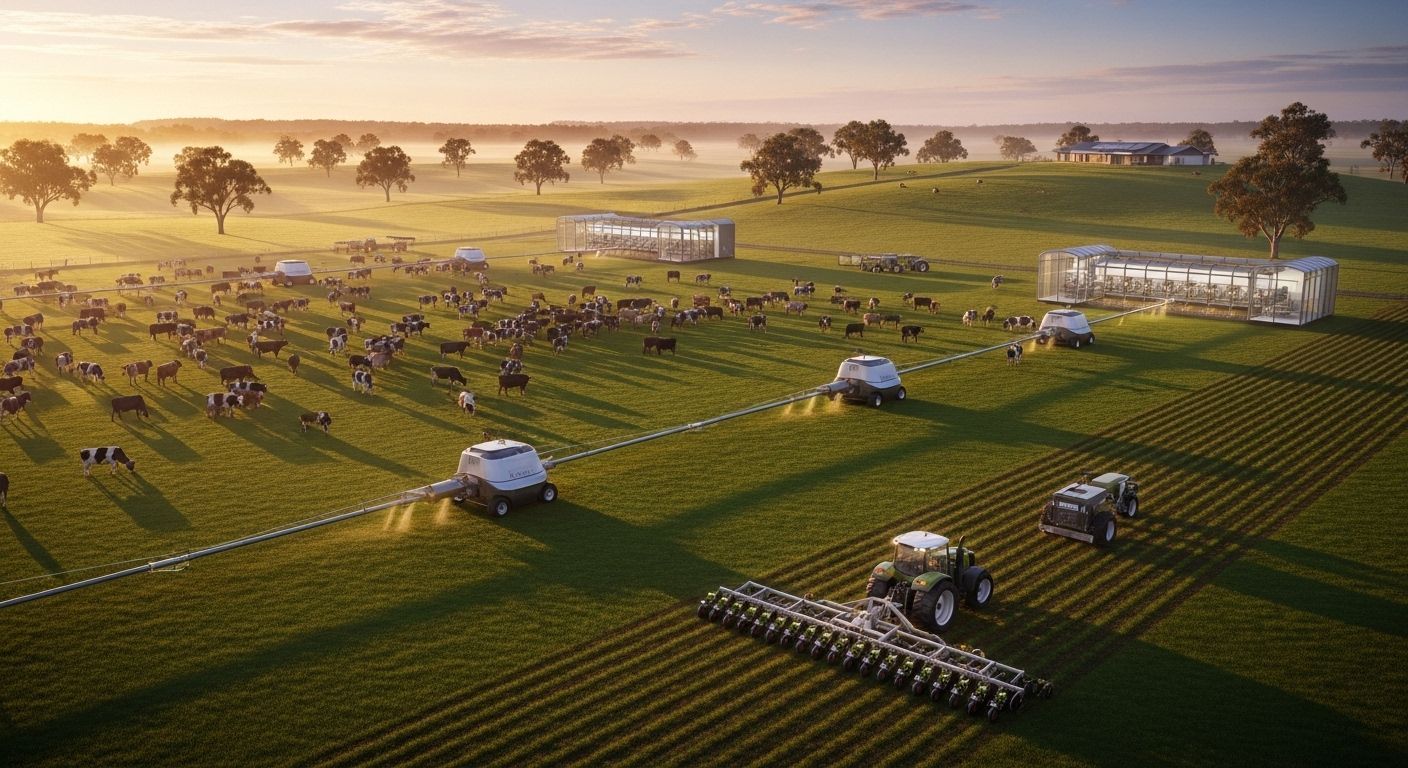
Advanced farming technology is transforming the industry by enabling farmers to work more efficiently with less physical labour. The average age of a farmer in Australia is 52 years. Automation allows them to keep working without the need for intense manual labour. Get a robotic milking system, a drone, and a fruit picker through agricultural machinery finance.
4. To Run a More Sustainable Farm
Using eco-friendly machinery reduces carbon footprint and also helps save money over time. Add a biomass boiler to turn food scraps, animal waste, and unused crops into heat and electricity for the land. Farm machinery funding can assist if you're looking to upgrade the farm to boost energy efficiency and achieve goals of sustainable farming in Australia.
Agricultural Equipment Financing: Pros and Cons
| Benefits | Downsides |
|---|---|
| Maintains liquidity, keeping funds available for emergencies or operations | Higher overall costs due to interest and fees |
| Interest on hire purchase or chattel mortgage is tax-deductible | Ownership may be delayed or not guaranteed (especially with leases) |
| Lease payments and scheduled repayments can be claimed as business expenses | Fixed repayments may strain cash flow during poor harvests or market downturns |
| GST portion can be claimed upfront (for eligible assets under HP or chattel mortgage) | Repayment schedules may not align with seasonal income fluctuations |
| Preserves working capital that can be invested in other areas like fertilisers, seeds, or agri-tech | Missed payments may lead to equipment repossession |
How to Finance Farm Equipment?
The farm land finance may depend on the type of equipment and the reason you plan to use it. Here are the best ways to finance farm equipment:
- Consider the required machinery and estimate its cost. Review your seasonal income, cash flow, and the operational lifestyle of the financed tool.
2.Decide whether you want to own the machine, including its required duration and funding. Choose the best lender that offers reliable financing options tailored to your agricultural needs.
3.Consider additional expenses, such as changing interest rates, insurance, or maintenance fees. These costs can vary depending on the type of equipment being financed and the market trends.
Financing vs. Leasing Farm Equipment
With a financing agricultural machinery loan, you are buying the equipment. Each payment contributes to eventual ownership after the full amount is repaid. This is a suitable option for strategic, long-term assets essential for business operations.
Leasing allows the use of machinery for a specific period through a lease agreement. While the payments are easier on the budget, you don't own the machinery. Leasing offers more flexibility, but financing helps build equity.
Conclusion
Australia's agricultural machinery market is continually evolving, driven by advancements in technology and the adoption of sustainable farming practices. Equipment finance allows farmers to spread the costs over time and minimise cash flow challenges. Consult with the Livestock Capital team to get expert advice on your equipment financing needs.